Snorkelling off Nassau: Reefs, Turtles and the Right Boat for Beginners
Updated September 26, 2026 · 7 min read
Nassau has 58 snorkelling trips from €61.45, and between them they hold over eight thousand reviews. The water is warm, shallow and clear, and almost nothing here requires any skill at all.
Which is exactly the problem. Because the entry barrier is so low, the listings assume you know things, and some of them will hand you a mask and point at the water.
Here is what to look for.
What there is to see
Three different things get called snorkelling in Nassau, and they are not interchangeable.
The reef. Shallow patch reef within twenty minutes of the harbour: parrotfish, sergeant majors, the occasional stingray, soft corals. It is not a wall, it is not deep, and that is why it works for people who have never done this before.
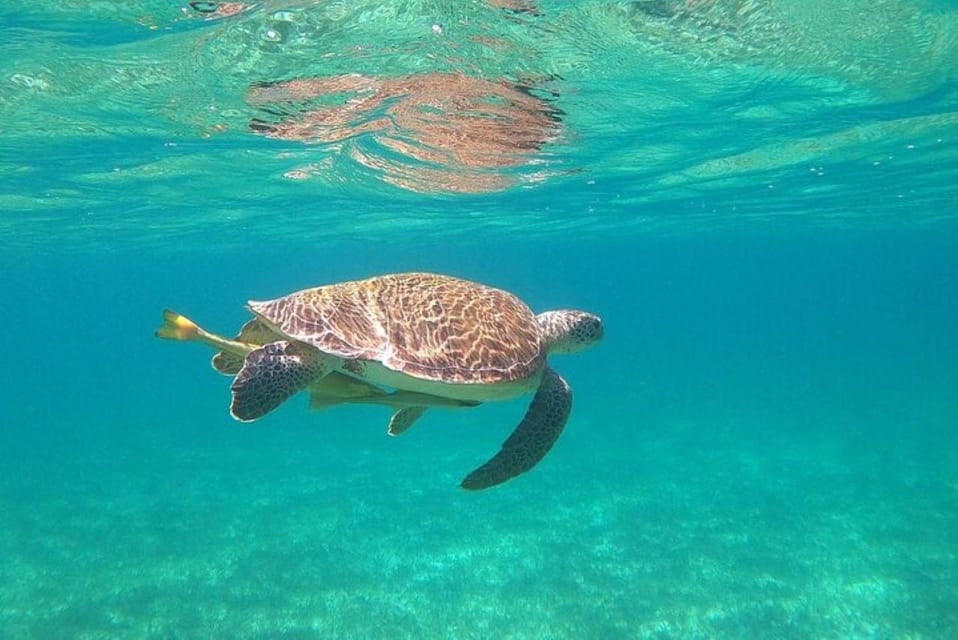
The turtles at Green Cay. A small uninhabited cay east of Nassau where green turtles gather. Operators call it the turtle stop or the turtle sanctuary. It is the single most reliable wildlife encounter on this coast — with the caveat below.
The wrecks and sculptures. A few trips take in a sunken sculpture or a sunken plane. Interesting, but these are add-ons to a beach day rather than dive sites.
The turtles: what is guaranteed and what is not
Sightings are not guaranteed. These are wild animals in their natural habitat, and the better operators put that on the booking page instead of letting you find out on the boat. Believe that rather than the photographs.
Watch how the turtle stop is described in the itinerary, too. On the big three-island days it is often twenty minutes of sightseeing — you look over the side while the boat holds position. If you want to be in the water with them, book a trip that is about the turtles. A three-hour Rose Island turtle swim and snorkel (€98.77, 4.7 stars from 42 reviews) does exactly that and nothing else.
All marine turtles in Bahamian waters have been fully protected since September 2009, when the Fisheries Regulations were amended to prohibit harvesting, possession, purchase and sale of turtles, their parts and eggs.
Beyond the law there is the behaviour that keeps the animals coming back, and it fits in one line: be patient, touch nothing, admire from a distance. A turtle needs to reach the surface to breathe. Floating directly above one is the commonest mistake and the one that ends the encounter.
Which boat
This is the decision that separates a good first snorkel from a bad one.
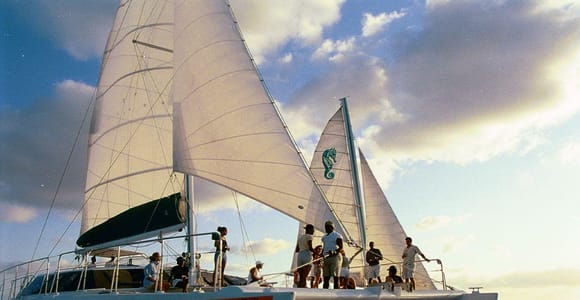
The catamaran is the beginner’s boat. It is stable, there is shade, there is a washroom, and the deck sits low enough to get in and out without drama. A catamaran sail and snorkel (€113.16, 4.3 stars from 156 reviews) runs three and a half hours to a reef and back.
The powerboat is faster, gets you more stops, and slams in a chop. Some are better equipped than they look: one operator runs a 35-foot centre console and mentions in its description that there is a dedicated restroom inside the console — a detail worth more on a three-and-a-half-hour trip than any of the photographs.
The glass-bottom boat is the option for people who do not want to get in at all. A glass bottom boat and snorkelling tour (€80.77, 4 stars from 121 reviews) is only an hour and a half: fifteen minutes of sightseeing, an hour at the snorkel site, fifteen minutes back to Cable Beach. Note that the listing describes it as a summer-only cruise, and that it mentions a banana boat ride which at least one reviewer reports did not happen. If the banana boat matters to you, confirm it at check-in.
If you have never snorkelled before
Look for three words in the listing: briefing, life jacket, shallow.
One well-rated trip spells all three out: “snorkel gear, life jackets, quick safety briefing”, in “shallow, calm waters”, and states outright that it suits “beginners, kids, families and wildlife lovers”. That is the standard to measure others against. If a listing mentions none of the three, assume none of the three.
Then, on the day:
- Take the vest even if you can swim. It keeps you horizontal without effort, which is the whole skill. Nobody on the boat will think anything of it.
- Spit in the mask, rub, rinse in seawater. Every crew does this; it is the only thing that reliably stops fogging.
- Try the mask before the boat leaves the dock. A mask that leaks is a mask that is the wrong shape for your face, and a good crew carries other sizes.
- Get in first, not last. The first five people in the water get the clear view; everyone after that is looking at stirred sand.
- Sunscreen goes on your back, and it goes on early. Floating face-down for an hour in the tropics is the classic Nassau sunburn.
One rule you will not expect and should know before you are standing on the dock: at least one operator states that people who are bleeding or have open wounds — menstruation included — are not permitted to snorkel or take part in water activities, for safety reasons. It is not a universal rule, but it is in writing on a booking page, and it is better read now than there.
Winter and summer are different trips
The sea is warmest in August, at around 29 °C. Nobody needs anything but swimwear.
From December to March the water is still perfectly swimmable, but the wind is up, the crossings are wetter and the reef is stirred more often. One catamaran operator quietly advises bringing a beach towel “especially December–March”, which tells you what those crossings are like. Take a light layer for the ride back; wet and moving at twenty knots is cold anywhere.
Boats also cancel for weather in winter more often than visitors expect. If your snorkel day is your last day, there is no room to reschedule — and most operators offer a reschedule or refund rather than running in bad conditions.
What’s usually in the price, and what isn’t
Snorkel gear is virtually always included. Lunch, alcohol, towels, sunscreen, gratuities and hotel pickup frequently are not — one four-hour beach-club snorkel lists the other five as extras but does include lunch, along with unlimited water and soft drinks and a grilled lunch of burgers, hot dogs and veggie burgers.
A couple of listings mention that cruise port pickup is available on request. If you are off a ship, ask before booking rather than after.
Prices start at €61.45 for a half day, and the median across the 58 trips is €131.69 — half of them cost more than that, which reflects how many bundle a beach club and lunch. If you want the reef and nothing else, you can pay a lot less than the median.
More on the water: 43 swimming pig trips from €58.60, 25 beach club days from €51.80, and how the combined days are put together in the three-island day.